


The Breezi is a height-adjustable wooden activity chair for children who need more postural support than ordinary furniture gives. It's made in the UK from birch with an antimicrobial lacquer, and more than 20 accessories let you set it up for eating, play and learning at a table.
Assistive Technology
Showing 1–9 of 115 results
BES Healthcare is known as the provider of top quality equipment, and has always understood the importance of postural management. We do not treat equipment as commodities.
-
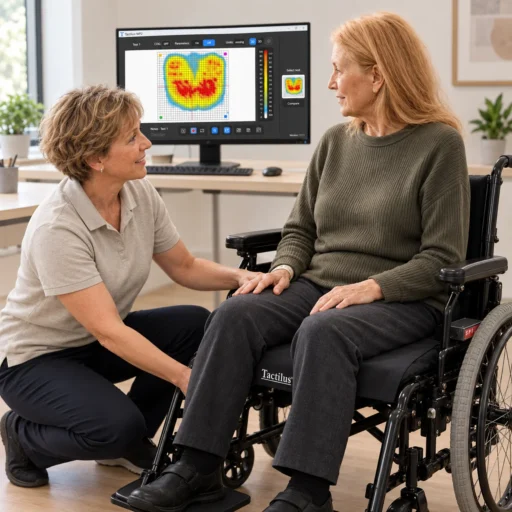
Tactilus Pressure Mapping System
Tactilus is a real-time pressure mapping system designed to measure, analyse and visualise pressu...
-

Breezi High Chair Range
The Breezi Activity Chair is more than just a piece of furniture, it’s a dynamic solution that ...
-
Teeni Chair
The Teeni Activity Chair is a height and depth adjustable wooden activity chair for children aged...
-
Chunc Adapt Wheelchair Base
A durable, tilt-in-space manual wheelchair base designed to fit all specialist seating systems fo...
-
Chunc Hilo Outdoor Wheelchair
The Chunc Hilo Outdoor is a height-adjustable indoor and outdoor activity chair for children and ...
-
Chunc Hilo Indoor Wheelchair
The Chunc Hilo Indoor is a height-adjustable activity chair for children and adults, designed to ...
-
Chunc Spica Wheelchair
The Chunc Spica is a rental-only rehabilitation wheelchair for children in spica casts or recover...
-
Chunc One Wheelchair
A versatile, attendant-propelled wheelchair designed to provide optimal support and adaptability ...
-
Stealth i2i Head and Neck Positioning System
The i2i offers a complete head and neck positioning solution, providing effective support for kee...
Frequently Asked Questions
Find answers about Assistive Technology from BES Healthcare, with practical information on product features, suitability and available options.
Breezi
BES Healthcare makes the Breezi in the UK, and each chair is built to order. The range has been in use for more than 30 years, and the core chair comes with a 10-year manufacturer's guarantee.
They're four sizes of the same idea. The Teeni is the smallest, for ages 1 to 4. The Teezi, Breezi and Breezi Max make up the Breezi High Chair Range for older and larger children.
|
Teeni |
Teezi |
Breezi |
Breezi Max |
|
|---|---|---|---|---|
|
Age guide |
1 to 4 years |
Not specified |
Not specified |
Not specified |
|
Chair width |
42 cm |
42 cm |
46 cm |
51 cm |
|
Chair height |
40 cm |
65 cm |
77 cm |
94 cm |
|
Seat plate depths |
11 or 13 in |
11 or 13 in |
12 or 14 in |
16 or 18 in |
|
Maximum user weight |
65 kg |
65 kg |
75 kg |
85 kg |
Choose the model from the child's measurements and expected growth rather than age alone.
The Teeni and Teezi take up to 65 kg, the Breezi up to 75 kg and the Breezi Max up to 85 kg.
Children and young people with mild to moderate seating needs, who need more support than standard chairs give at home, nursery or school. The right model and accessories depend on the child's size, posture and activities, so involve their therapist in the setup.
Yes. The seat and footplate adjust in height and depth, and each model takes two seat plate depths. Accessories can be added, moved or removed as the child's size and support needs change. When a child outgrows the Teeni, they can move up to the Teezi or Breezi.
Yes. It's built for indoor use at home, nursery, school and in therapy settings. The birch frame looks like ordinary furniture, and the antimicrobial lacquer and upholstery wipe clean.
More than 20, including the High Back Rail, Padded Tall Back, Pre-ischial Ridge Pad, Lateral Thigh Pads, Medial Knee Pads, Cornerback, chest straps, a tray, a head rest, arm supports, stabilising skis, a low-level mobile frame and a transfer step. Each name should link to its product page.
Teeni
The Teeni is for children aged 1 to 4. It's a smaller, nursery-friendly version of the Breezi, made from birch with an antimicrobial lacquer, and its seat and footplate adjust in height and depth.
They can move up to the Teezi or Breezi, which adjust in the same way and take the same style of accessories.
Chunc wheelchairs
Chunc makes wheelchairs for children and young people with complex postural and mobility needs. The chairs are built to grow with the user. BES Healthcare supplies the Chunc range in the UK.
The Chunc Adapt (a tilt-in-space manual base), the Chunc Hilo Indoor and Hilo Outdoor (height-adjustable activity chairs), the Chunc One (attendant-propelled) and the Chunc Spica.
Yes. The Chunc Spica is available to purchase, and a rental model is also available. Rental is currently available in Ireland and Scotland, with the hire period agreed with the local representative. Contact the local representative to discuss availability and delivery.
Standers
A stander, also called a standing frame, supports someone in an upright position when they can't stand unaided. BES supplies the CAT I Stander for children and the Akces-Med SMART Stander, which comes in eight sizes for children and adults.
They can be. Akces-Med lists cerebral palsy among the conditions the SMART Stander is used for, along with spinal cord injury, multiple sclerosis and muscle diseases. A stander is a medical device, so a healthcare professional should assess the child and set it up.
Yes. The SMART Stander comes in eight sizes covering children and adults. It has chest and pelvic braces and four braked castors.
Pressure mapping
Pressure mapping measures the pressure between a person and the surface they're sitting or lying on, and shows it as a colour map on screen. Clinicians use it during seating and pressure care assessments to compare cushions, backs, mattresses and positions.
A thin mat full of pressure sensors goes between the person and the cushion, back or mattress. The sensors send readings to software that shows the pressure in real time. Tactilus, for example, records up to 1,000 readings a second from sensing points as little as 2 mm apart. Read the results alongside posture, comfort and skin condition.
BES supplies Tactilus pressure mapping systems for new sales. Tactilus is available as a seat mat, a seat-and-back pair or a bed system.
Mostly wheelchair and seating services, occupational therapists, physiotherapists and tissue viability teams. It helps most when a person is at risk of pressure injury or when equipment needs comparing objectively. It supports clinical judgement and doesn't replace it.
Yes. Mapping the same person on different cushions, or on one cushion at different settings, shows where pressure is concentrated and how a change moves it. It can also help explain a seating decision to the user and their family. Use it alongside posture, function, comfort and skin checks.
The price depends on the Tactilus system, mat configuration and software required. Contact us for a quote.
Wheelchair cushions and pressure care
Start with the person's pressure injury risk and their posture, then look at stability, comfort, transfers, heat and moisture, and how easy the cushion is to clean. The cushion also has to match the wheelchair's seat width and depth. Where there's a clinical need, choose with a seating assessment.
A pressure relief cushion spreads a person's weight over a larger area, or lets them sink in, so less pressure falls on bony areas like the sitting bones and tailbone. A standard cushion is mainly for comfort. Pressure relief cushions use air, foam, gel, a mix of these, or 3D polymer structures like NEST.
The main types are foam, air, gel, hybrid (usually air and foam together) and open 3D polymer. They differ in how far the user sinks in, how stable they feel, how they handle heat and moisture, and how they're cleaned. BES supplies Varilite air-foam cushions and NEST 3D polymer cushions.
Varilite cushions combine air and foam. The Varilite Evolution, for example, has three densities of foam inside an air cushion, so it still gives support if it's punctured. The Evolution can have a pressure setting valve with three preset positions, and comes in widths from 30 cm to 60 cm.
No single cushion is best for everyone. The right one depends on the person's risk level, posture, how much they move and how they transfer. For moderate to complex skin and positioning needs, an adjustable air-foam cushion like the Varilite Evolution is a common choice. A seating assessment, ideally with pressure mapping, should make the final call.
There's no fixed interval. Inspect the cushion regularly and replace it when it's damaged, has lost its shape or support, or has reached the manufacturer's service life. Reassess if the user's weight, posture or skin condition changes.
Follow the manufacturer's instructions for both the cover and the core, because they're often different. Varilite Evolution covers are machine washable. The NEST core can be decontaminated in a CE-marked washer-disinfector. Using the wrong method can damage the materials.
NEST
NEST is a cushion and mattress material made from an interlocking 3D polymer loop structure that's about 90% air. It spreads pressure in all directions, lets air flow through to reduce heat and humidity, and is fully recyclable.
NEST has an open structure that air passes straight through, while foam is a solid material. That means NEST can be washed and disinfected through the core and runs cooler. Foam cushions usually can't be washed through, and they handle heat differently. The right choice still depends on the user's needs.
Decontaminate the NEST core in a CE-marked washer-disinfector. The K+F Equipment Washer Disinfector supplied by BES processes NEST mattresses along with beds, wheelchairs and hoists.
Head supports
A wheelchair head support holds the head, and sometimes the neck, in a position that's comfortable and lets the person see, eat and communicate. Designs range from a simple pad behind the head to systems that support from the sides, below the skull or the front.
When someone can't hold their head in a comfortable, functional position for long, for example because of low muscle tone, strong extensor tone or fatigue. The right type depends on the cause, so a qualified professional should assess the person first.
People use the words interchangeably. A headrest usually means a pad to rest the head against. A head support is chosen and positioned to control head position, and may support from the sides or front as well as behind.
For children, BES supplies the Stealth i2i in Niño sizes (from 18 cm neck circumference), the Savant in a paediatric size (36 to 46 cm forehead circumference) and the TOT Collar for infants from 4 months with torticollis.
The Stealth i2i is a head and neck positioning system for people with strong extensor tone and poor head control. It supports from the back and sides, including a sub-occipital pad, to keep the head in midline. Pads come in sizes from Niño Extra Small (18 cm neck circumference) to Extra Large (46 cm), with a range of mounting hardware.
The Savant is a gel head support that you shape by hand to fit the user. It's light, lets air circulate and attaches to standard three-point hardware. Side pads and a low-profile headband can add support from the side or front. Sizes run from paediatric (36 cm forehead circumference) to adult (61 cm).
The TOT Collar is a therapy aid for infants from 4 months old with congenital muscular torticollis, where a tight neck muscle tilts the head to one side. It gives a gentle prompt on the side of the head so the baby moves their head back towards the middle. Don't leave a baby alone while wearing it, and take it off for sleep.
The Headmaster Collar from Symmetric Designs is a lightweight, low-profile cervical collar that gives firm support to the head. It's used for conditions including ALS (motor neurone disease), multiple sclerosis, arthritis and dropped head syndrome. It comes in six sizes, bends by hand to fit and leaves access for a tracheostomy tube.
Wheelchair belts and harnesses
They hold the pelvis or upper body in a stable position in the wheelchair. A stable pelvis gives a better base for sitting, reaching and using the arms. BES supplies Bodypoint pelvic belts, chest harnesses and shoulder harnesses, plus leg and ankle straps.
No. Positioning belts and harnesses are for posture. They aren't vehicle seatbelts or restraints, and they don't replace a crash-tested occupant restraint when a wheelchair user travels in a vehicle. Check the instructions for the belt, the wheelchair and the vehicle restraint system before travel.
A pelvic belt positions the pelvis, which is the base of seated posture. A chest or shoulder harness supports the trunk higher up. They do different jobs and are often used together.
Look at the person's posture, body shape, movement and what they need to do in the chair, then at the wheelchair it's going on. Size, strap angle and mounting position matter as much as the harness style, so have it fitted and adjusted by someone trained.
Most Bodypoint belts and harnesses fit a wide range of wheelchairs and seating systems with the right mounting hardware. Bodypoint makes a Belt Mounting Hardware Kit for this. Check the mounting position on the actual chair before ordering.
Postural supports
A postural support is any part of a seating system that helps hold the body in a stable, functional position, such as lateral trunk supports, shoulder retractors, thigh supports and arm supports. The aim is to give enough support for the person to look, reach and communicate while keeping the movement they have.